


What Does Sustained Mean in Court?
You’ve almost certainly heard it in a courtroom drama: a lawyer jumps up, shouts “Objection!” and the judge responds with a single word: “Sustained.” Everyone in the room reacts like something important just happened. But if you’ve ever paused the show and wondered what that word actually does, you’re not alone.
Here’s the short answer: when a judge says “sustained,” it means the judge agrees with the lawyer’s objection. The question, testimony, or piece of evidence that was objected to is blocked, and the trial proceeds without it.
This guide breaks down exactly what “sustained” means in a court of law, how it’s different from “overruled,” why judges make these rulings, and what it looks like in a real courtroom exchange.
What Does Sustained Mean in a Court of Law?
To understand “sustained,” you first need to understand what an objection actually is. In court, an objection is a formal statement by an attorney that a question, a piece of testimony, or a piece of evidence violates the rules of legal procedure or evidence.
Once an attorney objects, the judge must make an immediate decision: is the objection legally valid or not? That decision comes down to one of two rulings.
According to a plain-language breakdown from Marasco & Nesselbush, when a judge says “sustained,” the simplest explanation is that the judge agrees with the objection — and that ruling controls the flow of testimony from that point forward.
In Court, What Does Sustained Mean for the Witness and Lawyer?
When an objection is sustained:
- The witness cannot answer the question as it was asked
- The attorney who asked the question must either rephrase it or move on to a different question
- Any evidence connected to the objection is excluded from the record the jury (or judge, in a bench trial) can consider
As the legal team at Davis & Davis Law puts it, when a judge sustains an objection, questioning must pivot immediately — there’s no room to keep pressing the same line of inquiry.
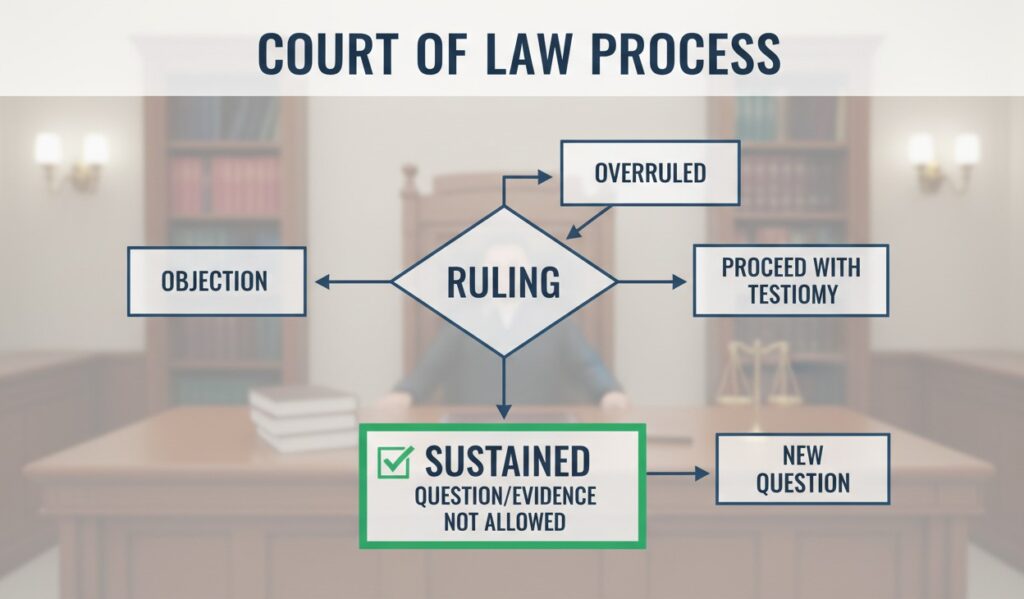
What Does Overruled and Sustained Mean in Court? (The Two Rulings, Compared)
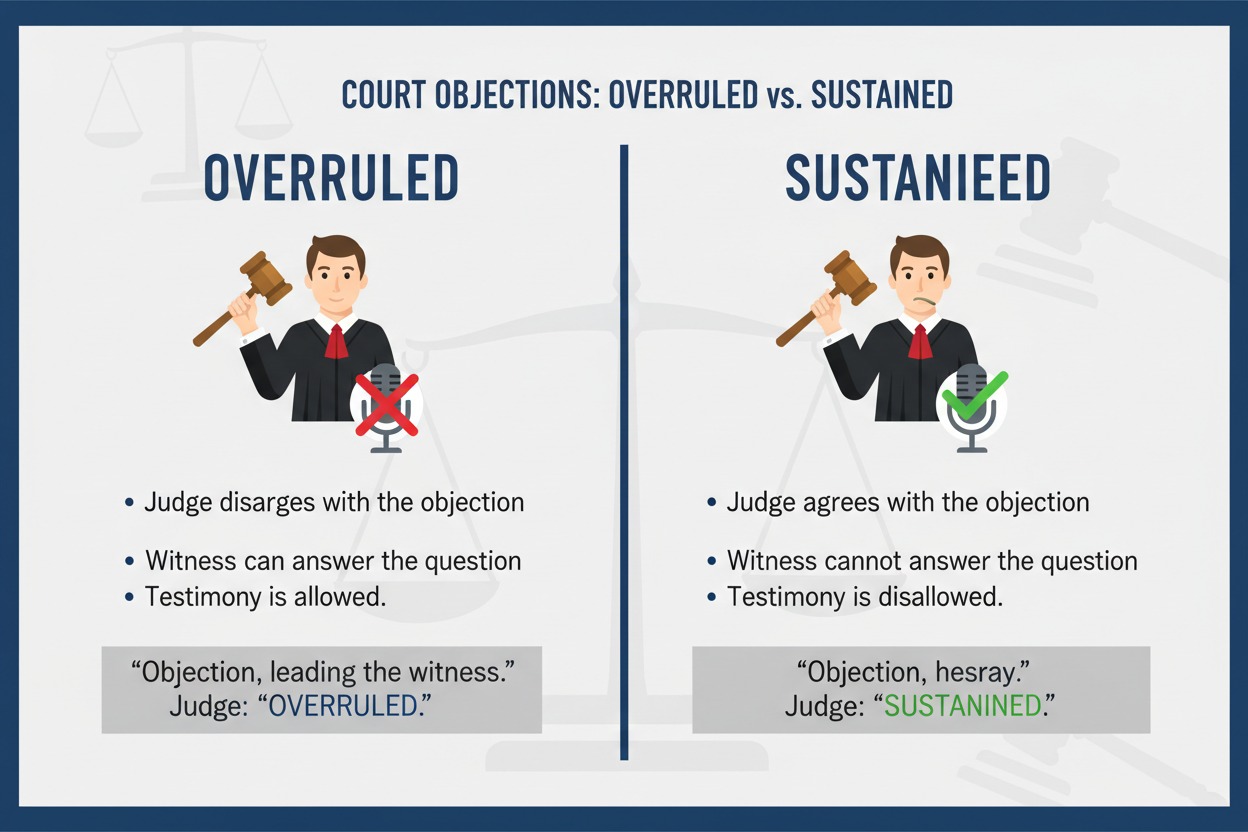
“Sustained” and “overruled” are opposite results of a lawyer’s objection. Seeing them together helps you understand both terms more quickly.
| Ruling | What It Means | What Happens Next |
|---|---|---|
| Sustained | The judge agrees with the objection | The question is blocked; the lawyer must rephrase or move on |
| Overruled | The judge disagrees with the objection | The question stands; the witness must answer it |
Think of it like a traffic signal, as one legal explainer from Rightful Advice frames it: sustained works like a stop sign for that line of questioning, while overruled acts like a green light, letting the question or testimony proceed as originally asked.
What Does Objection Sustained Mean in Court, Specifically?
“Objection sustained” is the full phrase judges say to show they agree with a lawyer’s challenge. “Objection” means the lawyer is making a complaint, and “sustained” means the judge agrees. It’s the same as just saying “sustained,” but the full phrase is used more in formal settings or official records.
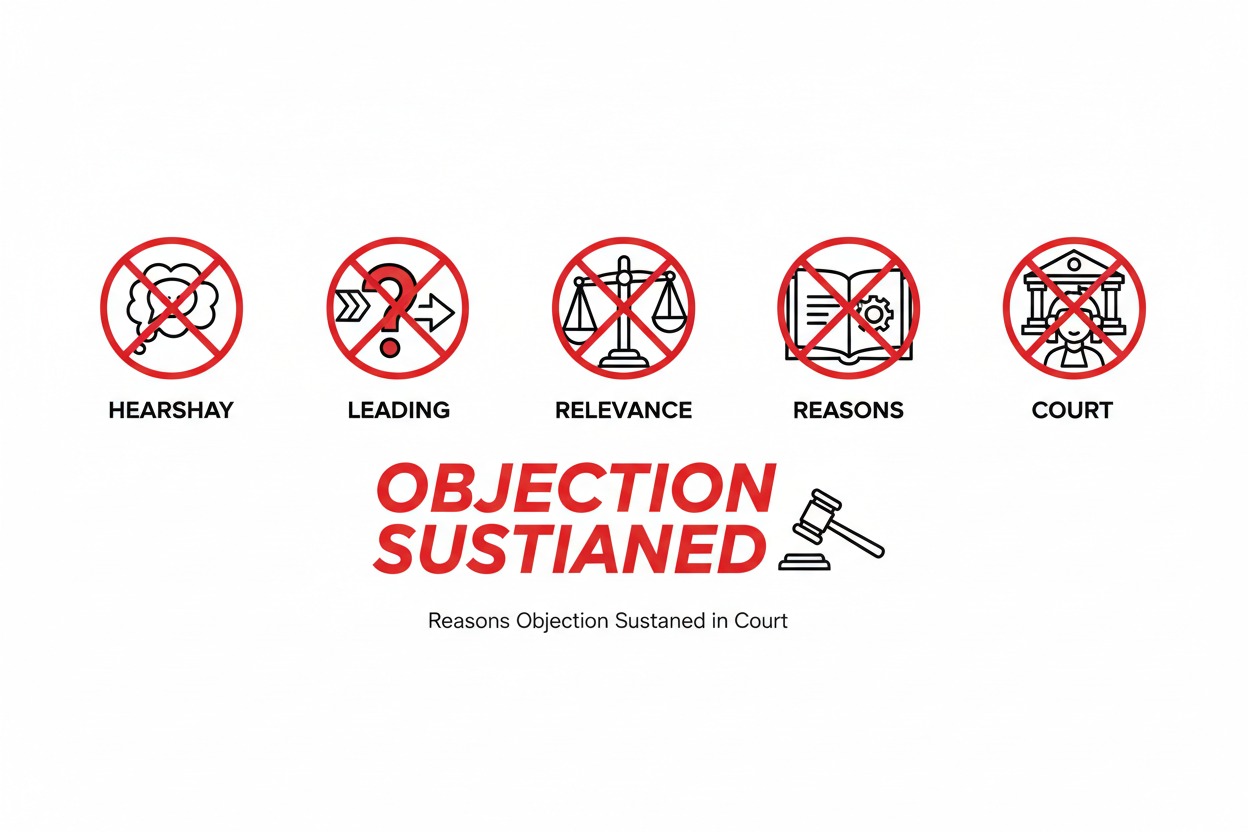
Why Do Judges Sustain Objections? Common Legal Grounds
A judge doesn’t sustain an objection just because a lawyer asks. It has to be grounded in an actual rule of evidence or courtroom procedure. According to attorneys writing for Marasco & Nesselbush, the most common reasons include:
- Relevance — the question or evidence doesn’t connect to the actual legal issues in the case
- Hearsay — the witness is trying to repeat something someone else said outside of court, which is generally inadmissible unless a specific exception applies
- Leading questions — the attorney phrases a question in a way that suggests the desired answer, which is typically improper during direct examination of a witness
- Speculation — the witness is being asked to guess about something they don’t actually know firsthand
- Improper character evidence or unfairly prejudicial material — the evidence risks unfairly swaying the jury beyond its actual relevance to the facts
Each reason helps keep the trial fair by ensuring the jury only hears testimony and evidence that are reliable and relevant.
If you want to know about What to Wear to Jury Duty, read our complete guide on it.
A Real Courtroom Example
Picture a personal injury trial. A lawyer asks a witness: “Didn’t your friend tell you the defendant was texting while driving?”
The opposing attorney objects: “Objection, hearsay.”
If the judge agrees that this statement is inadmissible hearsay because the witness is repeating something someone else told them, rather than something they personally saw, the judge says: “Sustained.” The witness cannot answer that question as posed, and the attorney must move on or rephrase to ask only about what the witness personally witnessed.
If, instead, the judge decides the statement falls under a recognized hearsay exception, the judge would say “Overruled,” and the witness would be required to answer.
Does It Matter If an Objection Is Overruled Instead?
Yes — and it matters even beyond the moment it happens. As explained by Davis & Davis Law, even an overruled objection becomes part of the official trial record. That matters because if a party believes the judge made a legal error in overruling the objection, that objection can become the basis for an appeal later. Attorneys often raise objections specifically to preserve that right, even when they expect the objection to be overruled in the moment.
Pros and Cons of the Objection System
| Pros | Cons |
|---|---|
| Keeps the jury from hearing unreliable or unfairly prejudicial evidence | Can interrupt the flow of testimony and feel disruptive |
| Gives both sides a formal way to challenge improper questioning | Requires quick, split-second legal judgment calls from the judge |
| Preserves issues for a possible appeal, even if overruled in the moment | Jurors sometimes read too much into a sustained objection, assuming guilt or wrongdoing |
| Helps enforce consistent rules of evidence across every trial | Frequent objections can feel combative or slow down proceedings |
Expert Tips for Understanding Courtroom Language
- Remember the simple version: sustained means the judge agrees with the objection; overruled means the judge disagrees.
- Don’t read too much into a single ruling. A sustained objection blocks one specific question — it doesn’t mean a witness or party is lying or guilty; it just means that particular question or piece of evidence didn’t meet the legal standard.
- Watch for the “why.” Judges and attorneys often state the specific ground for an objection (hearsay, leading, relevance) — learning those categories makes courtroom scenes, real trials, and transcripts far easier to follow.
- Know that overruled objections still matter. They get preserved in the trial record and can become part of a future appeal, even if the ruling didn’t go the objecting attorney’s way in the moment.
- If you’re a juror or party in a case, remember that a judge’s ruling on an objection is final for that trial — it’s not something to be second-guessed from the jury box.
FAQs
1. What does sustained mean in court?
It means the judge agrees with a lawyer’s objection, blocking the question, testimony, or evidence that was challenged.
2. What does sustained in court mean for the jury?
It means the jury should disregard the question or answer entirely — it’s treated as if it was never properly presented as evidence.
3. What does sustained and overruled mean in court, in one sentence each?
Sustained means the judge agrees with the objection and blocks the material; overruled means the judge disagrees and allows the question or evidence to proceed.
4. What does objection sustained mean in court compared to just “sustained”?
They mean the same thing. “Objection sustained” is the full, formal phrase judges use, especially in official court settings.
5. Can a sustained objection be appealed?
Usually, only overruled objections can be appealed because sustained objections help the side that raised them. However, all rulings are recorded in the trial record, which appellate courts can review.
Final Thoughts
“Sustained” is a short word carrying a very specific meaning: the judge agrees that a question or piece of evidence violates the rules that keep a trial fair, and blocks it. Its counterpart, “overruled,” does the opposite. Together, these two rulings are the backbone of how objections actually function — protecting the integrity of a trial one question at a time, whether you’re watching from the jury box, following a case as a party involved, or just trying to make sense of your favorite courtroom drama.
Want to understand courtroom rules better? Learn about different types of objections like hearsay, leading questions, and guessing. Knowing why a judge makes a decision will make the process clearer.
This article is for general informational purposes and isn’t legal advice. Courtroom procedures can vary by jurisdiction — consult a licensed attorney for guidance on a specific case.