


What to Wear to Jury Duty: The Complete Guide
A jury summons has a way of triggering two questions at once: “How do I get out of this?” and “What on earth do I wear?” The second one is actually the easier problem to solve — and getting it right matters more than you might think, since showing up underdressed can genuinely get you sent home to change, costing you another day off work.
Here’s the short version: most courthouses expect business casual attire — neat, modest, and comfortable clothing that shows respect for the court, without requiring a full suit. This guide covers exactly what that means for men and women, what to avoid, and the truth about whether your outfit can actually help you avoid getting picked.
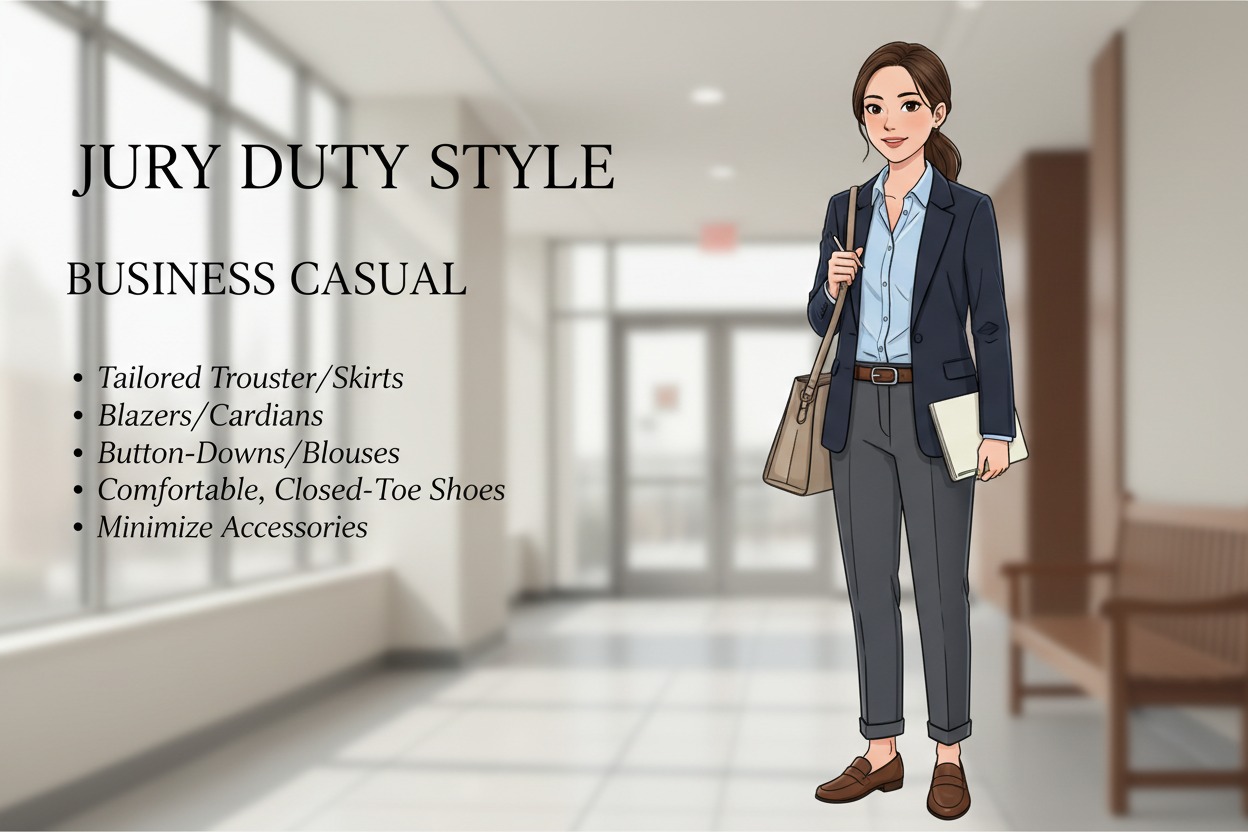
What Do You Wear to Jury Duty? The General Dress Code
Most U.S. courthouses don’t publish a strict, itemized dress code — instead, jurors are asked to dress “respectfully” or in “business casual” attire. According to official guidance from federal courts, including the Northern District of California and Northern District of Oklahoma, business casual is the standard expectation, with hats, shorts, tank tops, and flip-flops or beach attire specifically called out as not permitted.
What “Business Casual” Actually Means for Jury Duty
Think of it as a step below a full suit, but well above weekend errands clothing:
- Tailored trousers, chinos, or a knee-length skirt or dress
- A button-down shirt, blouse, sweater, or cardigan
- Closed-toe shoes that are comfortable enough to wear all day
- Clean, wrinkle-free clothing in neutral or muted colors
What to Avoid
- Shorts, tank tops, halter tops, or bare midriffs
- Flip-flops, athletic sandals, or beach-style footwear
- Ripped jeans, sweatpants, or athletic wear
- Clothing with large logos, offensive graphics, or slogans
- Non-religious hats (religious head coverings like hijabs, yarmulkes, turbans, and kippahs are always permitted and protected)
As one courthouse guide from the Eastern District of Oklahoma puts it plainly: since you may actually be involved in court proceedings, tank tops, shorts, t-shirts, and sweatpants simply aren’t appropriate for the courtroom, even if the jury assembly room feels more relaxed.
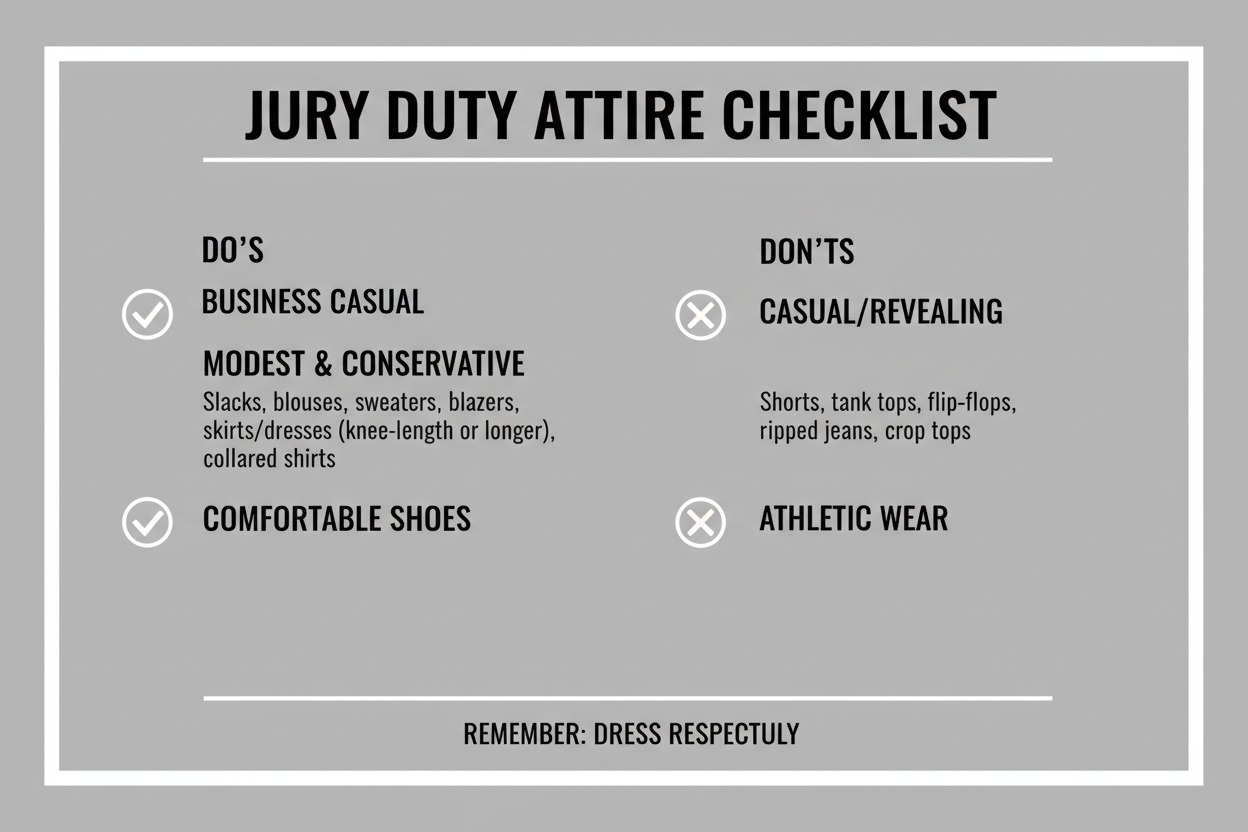
What to Wear for Jury Duty: Practical Tips Beyond the Outfit
- Dress in layers. Courthouses are frequently over-air-conditioned, and you may be sitting for hours — a cardigan, blazer, or light jacket makes a big difference.
- Choose quiet, comfortable shoes. You’ll likely walk through metal detectors, wait in long lines, and sit for extended periods, so closed-toe flats, loafers, or low heels are smarter than anything flashy or noisy.
- Skip excess metal and jewelry. You’ll pass through a metal detector every time you enter the courthouse, so minimizing jewelry and avoiding steel-toe shoes can speed up security, according to guidance from the Western District of North Carolina.
- Keep prohibited items at home. Many courthouses restrict items like vape pens, pocketknives, and even large bags — checking your specific court’s list ahead of time avoids an awkward moment at the entrance.
- When in doubt, call the courthouse. Guidelines can vary meaningfully between counties, states, and federal districts, and courthouse staff are used to fielding this exact question.
What to Wear to Jury Duty: Female-Specific Outfit Ideas
For women, business casual attire that reads as neat, modest, and comfortable works well across nearly every courthouse. Good combinations include:
- Tailored trousers or a midi skirt with a simple blouse
- A knit top or cardigan with dress pants
- A modest dress or shirt-dress that hits at or below the knee
- A blazer layered over a simple top for a slightly more polished look
- Closed-toe flats, loafers, or low block heels
Avoid anything overly revealing — very short skirts, low-cut tops, or sheer fabric — since courthouses expect modest, professional presentation, according to style guidance compiled by Fibflx. Some formal federal courtrooms go a step further for parties and attorneys — requiring tailored suits or tailored dresses — but jurors are generally held to the more relaxed “business casual” standard.

What to Wear to Jury Duty: Male-Specific Outfit Ideas
For men, the safest formula is straightforward and works in nearly every courthouse:
- A button-down shirt (long or short sleeve) tucked into dress pants or chinos, with a belt and closed-toe dress shoes or loafers
- A collared shirt with a navy or charcoal blazer for a slightly more polished federal-court-appropriate look
- Neatly pressed slacks or khakis, paired with a sweater or cardigan for cooler courthouses
According to a detailed style breakdown from Klodsy, a long-sleeve or short-sleeve button-down with dress pants and dress shoes is the most reliable, universally acceptable combination across courthouse types. Jeans, sneakers, and graphic tees are risky choices — they may pass through security at some courthouses, but they can also draw a comment from court staff or, in rare cases, get someone dismissed from the jury panel entirely.

Quick Reference Table: What to Wear vs. What to Avoid
| Wear This | Avoid This |
|---|---|
| Button-down shirt, blouse, or sweater | Tank tops, halter tops, graphic tees |
| Tailored trousers, chinos, or midi skirt | Shorts, athletic wear, ripped jeans |
| Closed-toe flats, loafers, or dress shoes | Flip-flops, athletic sandals, beach footwear |
| A blazer or cardigan for layering | Sweatpants or overly casual hoodies |
| Neutral or muted colors | Clothing with offensive graphics or large logos |
| Religious head coverings (always permitted) | Non-religious hats inside the courtroom |
What to Wear to Jury Duty to Not Get Picked: Does It Actually Work?
This is one of the most-searched questions on this topic, and it deserves an honest answer: clothing has almost no real impact on whether you’re chosen for a jury.
According to legal analysis from LegalClarity, dressing to dodge jury duty is largely a myth. What actually determines whether attorneys keep or dismiss you is the voir dire process — the formal questioning stage where lawyers ask about your background, opinions, and any potential biases related to the case. Attorneys have a limited number of opportunities to remove prospective jurors, and they use those opportunities based on what you say in response to questions, not what you’re wearing.
That said, there’s a kernel of practical truth buried in the myth: an outfit that’s sloppy, overly casual, or attention-grabbing can create a fleeting first impression — but it’s not going to override your actual answers during questioning. If your real goal is to avoid serving, the far more effective path is a legitimate excusal or deferral request. Most courts allow prospective jurors to request a postponement or excusal for genuine hardship, and permanent excusals often exist for specific groups such as people over a certain age or those with a recent history of federal jury service, according to official guidance from the U.S. Courts.
The Bottom Line on “Dressing to Avoid Selection”
- Wardrobe choices are not a reliable strategy for avoiding jury selection
- Your answers during voir dire questioning are what actually matter
- A legitimate hardship, deferral, or excusal request is a far more effective option if you genuinely cannot serve
- Regardless of your selection odds, dressing respectfully is still the right call, since courthouse staff and judges do notice attire that’s clearly inappropriate
Pros and Cons of Different Dress Code Approaches
| Approach | Pros | Cons |
|---|---|---|
| Business casual (recommended) | Meets nearly every courthouse’s expectations; comfortable for long days | Requires a bit more planning than throwing on casual clothes |
| Full business formal | Shows extra respect; safe for high-profile or federal cases | Can feel overly stiff or uncomfortable for a full day of waiting |
| Very casual (jeans, sneakers) | More comfortable and low-effort | Risk of being asked to leave and reschedule; may draw unwanted attention |
| “Blending in” strategy to avoid selection | Low-stakes, doesn’t hurt to try | Not supported by how jury selection actually works — voir dire answers matter far more |
Expert Tips for Jury Duty Day
- Check your specific summons or courthouse website first. Dress codes and prohibited items can vary significantly between state, county, and federal courts.
- Pack light and leave prohibited items at home. Vape pens, large bags, weapons, and even knitting needles are commonly restricted — check ahead to avoid a hassle at security.
- Bring a layer no matter the season. Courthouses are notoriously over-air-conditioned, and you may be sitting for hours without much movement.
- Treat the first day like a job interview. First impressions do matter for setting a respectful tone, even if they don’t determine jury selection outcomes.
- If you genuinely can’t serve, request an excusal properly. It’s a far more reliable path than trying to dress your way out of selection.
FAQs
1. What should I wear to jury duty?
Business casual attire is the standard expectation almost everywhere — think tailored pants or a knee-length skirt paired with a button-down shirt, blouse, or sweater, and closed-toe shoes.
2. What can I wear to jury duty if I don’t own business casual clothing?
Focus on the basics: neat, non-ripped pants or a modest skirt, a collared shirt or simple top, and closed-toe shoes — you don’t need a suit, just clean and presentable clothing.
3. What to wear to jury duty to not get picked — does it really work?
No, not meaningfully. Jury selection is driven by your answers during the voir dire questioning process, not your outfit, though a legitimate excusal or deferral request is a much more effective option if you truly cannot serve.
4. What should you wear to jury duty in the summer?
Stick to the same business casual guidelines — lightweight trousers, a blouse or short-sleeve button-down, and closed-toe shoes — while avoiding shorts, tank tops, and sandals, which remain restricted regardless of season.
5. Can you get sent home from jury duty for what you’re wearing?
Yes. Clearly noncompliant clothing, like shorts or tank tops, can get you turned away at security and asked to return another day, which doesn’t cancel your jury service obligation — it just delays it.
Final Thoughts
Dressing for jury duty doesn’t need to be complicated: business casual, comfortable, and respectful covers nearly every courthouse’s expectations, whether you’re a man or a woman, and whether it’s your first summons or your fifth. And if your real hope is to avoid getting picked, save the energy you’d spend agonizing over your outfit — it’s your answers during questioning, and a legitimate excusal request if needed, that actually make the difference.
Getting your outfit sorted before your court date? Lay out your clothes the night before, check your specific courthouse’s guidelines, and show up ready to focus on what actually matters once you’re there.
This article is for general informational purposes and isn’t legal advice. Dress codes and jury duty procedures vary by court — check your specific summons or courthouse website for exact requirements.
Also Read: What Does the 14th Amendment Say?
What Is a Prenup? A Plain-English Guide for Couples