


What Is a Security Classification Guide? A Complete, Plain-English Breakdown
I still remember the first time someone handed me a stack of government training slides and told me to “know the SCG before Monday.” I had no idea what that acronym even stood for, and I spent an embarrassing amount of time that weekend trying to piece it together from scattered PDFs and confusing quiz questions. If you are here because you typed what is a security classification guide into Google, you are exactly where I was a while back, and I want to save you that weekend.
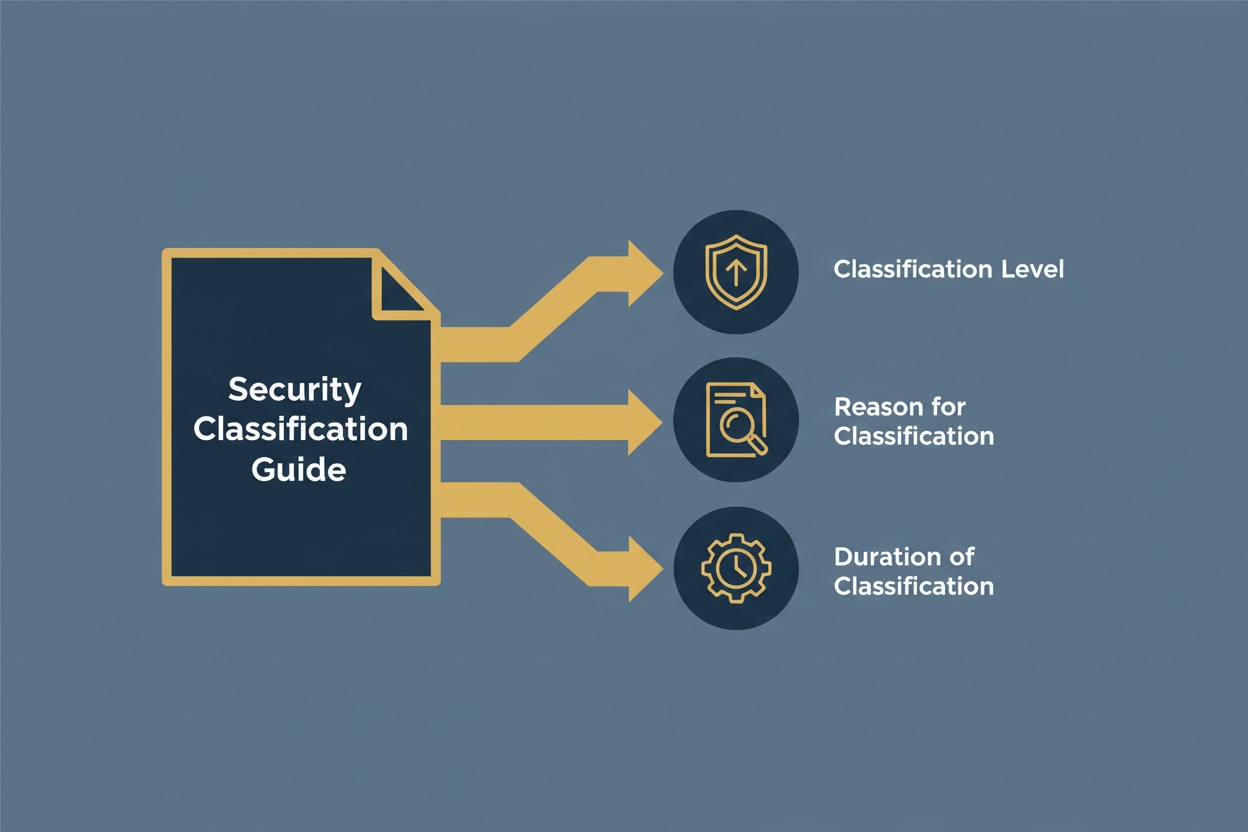
So let me answer it right away, in one sentence, before we go any deeper: a security classification guide is an official document, written and signed by someone with original classification authority, that tells everyone else exactly which pieces of information about a program, system, or project are classified, at what level, why, and for how long. That is it. It is not a person, not a piece of software, and not a physical safe. It is a rulebook.
Everything else in this guide is me unpacking that one sentence, showing you real examples, comparing it to the terms people confuse it with, and walking through how it shows up on the Cyber Awareness Challenge, in Quizlet decks, and inside Army regulations. I have gone through a lot of the same training modules you probably have, and I will point out where I personally got tripped up so you don’t repeat my mistakes.
What Is a Security Classification Guide?
A security classification guide, almost always shortened to SCG, is a written record of classification decisions. Somebody with the legal authority to originally classify information, called an Original Classification Authority or OCA, sits down and decides which facts about a system, weapon, mission, or program could hurt national security if they leaked out. Instead of leaving that judgment call to every single person who later writes a report or a memo, the OCA writes it all down in one document.
According to the Information Security Oversight Office’s own training handbook, an SCG functions as a record of original classification decisions that other people can reference as a source document when they create derivatively classified material. That’s the whole point. It removes the guesswork.
Think of it like a restaurant’s recipe card taped to the kitchen wall. The head chef decides once how much salt goes into the soup. Every other cook who makes that soup afterward just follows the card. Nobody has to re-invent the recipe, and every bowl of soup tastes the same. An SCG does the same thing for classified information: one authority decides once, and everyone else follows the guide.
The ISOO handbook on developing and using security classification guides also notes that agencies are encouraged to publish these guides specifically to keep classification management standardized and efficient across an organization, rather than leaving it up to individual interpretation.
Why Security Classification Guides Actually Matter
I used to think of classification guides as bureaucratic busywork until I sat through a briefing where an officer explained what happens when there isn’t one. Picture ten different people writing reports about the same weapons program. Without a shared guide, one person marks a detail as Secret, another marks the same detail as Confidential, and a third leaves it unmarked entirely because they didn’t think it mattered. Now you have inconsistent protection on the same piece of information, and that inconsistency is exactly what an adversary looks for.
The purpose, according to official guidance, is to communicate classification decisions clearly and make sure that everyone who touches that information treats it the same way, every single time. That single idea, consistency, is why the SCG is considered one of the most influential documents in the entire information security world. Executive Order 13526, the current governing order for classified national security information, sets the legal backbone that makes this whole system possible. You can read the order in full on the National Archives ISOO policy page.
Here’s a short list of what happens when classification guidance is missing or poorly written:
- Analysts either over-classify harmless information, which slows down legitimate research and collaboration
- Or they under-classify sensitive details, which creates real security gaps
- Contractors and cleared personnel waste hours guessing instead of working
- Declassification review becomes a nightmare years down the line because nobody recorded the original reasoning
I have personally sat in a room where a project got delayed almost two weeks because the classification guidance for a subsystem was outdated, and nobody wanted to take the risk of marking something incorrectly. That delay was completely avoidable. A current, well-maintained SCG would have prevented it.
Who Actually Writes a Security Classification Guide?
Only an Original Classification Authority can create and sign an SCG. This is not a job title you can just claim. OCAs are specifically designated individuals, usually senior officials, who have been delegated the authority to make an original classification decision in the first place. A regular employee, contractor, or even a mid-level manager cannot write one unless they hold that formal delegation.
Here is where a lot of people get confused, myself included when I first learned this. There are two very different roles in the classification world:
- Original classification is the initial decision that a specific piece of information needs protection, made by an OCA.
- Derivative classification is when someone else takes that existing classified source, like an SCG, and applies the same classification markings to a brand new document.
Most people who work with classified information every day are derivative classifiers, not original classifiers. They are not deciding what should be classified from scratch. They are reading the SCG and following its instructions, the same way that kitchen staff follows the recipe card instead of inventing a new soup every day.
According to AcqNotes’ breakdown of the SCG process, within Department of Defense acquisition programs specifically, the Program Manager is responsible for developing the SCG in accordance with DoD Manual 5200.01, and the guide becomes part of the program’s larger Program Protection Plan.
What’s Actually Inside a Security Classification Guide?
This is the part most beginner articles skip over, and it’s honestly the most useful part if you actually have to work with one. A properly built SCG is not a vague paragraph of legal language. It is closer to a giant table or checklist. Each row usually represents one specific “element of information,” meaning one particular fact or category of fact about the program.
For every single element, the guide spells out:
| Field | What It Tells You |
|---|---|
| Item or element of information | The exact fact or category being addressed (example: “existence of the program”) |
| Classification level | Top Secret, Secret, or Confidential |
| Reason for classification | Which category under the governing executive order justifies protecting it |
| Duration | When it can be downgraded or declassified, or a specific event that triggers declassification |
| Remarks or special handling notes | Any caveats, special access requirements, or cross references to related items |
That structure is exactly what the Cyber Awareness Challenge 2025 training material reinforces. It describes an SCG as providing precise, comprehensive guidance about a specific program, system, operation, or weapon system, covering the classification level, the reason for classification, and the duration, and it stresses that the guide is approved and signed by the cognizant OCA.
Older Army documentation, like the Appendix G format found in AR 380-5, shows this table format in action. It literally lists numbered items such as “Antiradiation missile vulnerability” with sub-items breaking down exactly which detail is Secret, which is Confidential, and which is unclassified, plus a note referencing the specific paragraph of the regulation that governs it. That level of specificity is what separates a real SCG from a vague classification policy.
What Is A Security Classification Guide Quizlet? Breaking Down the Study Version
A huge number of people search this exact phrase because they are prepping for a certification exam, an annual refresher, or a college course, and they land on a Quizlet deck instead of the source. I get it. Quizlet decks are fast. But here is the catch, and I say this as someone who has used Quizlet plenty of times myself: the flashcards are only as good as whoever wrote them, and definitions get slightly reworded every time someone copies a deck.
If you search Quizlet for this topic, you will run into decks with titles like “Security Classification Guidance” or “CDSE Derivative Classification,” and most of them boil the concept down to a single multiple-choice answer: an SCG is described as the primary source for derivative classification. That phrasing shows up constantly because it is the correct answer to a very common exam question format across annual training modules.
A few things I’d genuinely recommend if you are studying from Quizlet:
- Cross-check the flashcard definition against the actual ISOO SCG handbook at least once, because some decks have small errors from repeated copying
- Pay attention to the difference between “properly marked source document” and “security classification guide” on quizzes, because test writers love mixing those two up
- Remember that a source document can be either originally or derivatively classified material, while an SCG specifically records original classification decisions
I studied from flashcards before a certification renewal once and got tripped up on a question that distinguished between a memorandum containing classification guidance and a formally published SCG. They are related but not identical, and Quizlet decks rarely explain that nuance clearly.
Security Classification Guide in Cyber Awareness 2025 (and What’s Different Going Into 2026)
If you landed here searching what is a security classification guide cyber awareness 2025 is, you are almost certainly doing your annual DoD Cyber Awareness Challenge and hit this exact term in the Information Security module. Good news: the challenge keeps this definition fairly consistent year over year, so what you learn now carries forward.
Inside the 2025 Information Security module, the challenge frames the SCG using three core bullet points I mentioned earlier: classification levels, reasons for classification, and duration of classification. It also explicitly states that the guide is approved and signed by the cognizant OCA and that it is treated as an authoritative source for derivative classification, ensuring the same information gets classified the same way no matter who is writing about it.
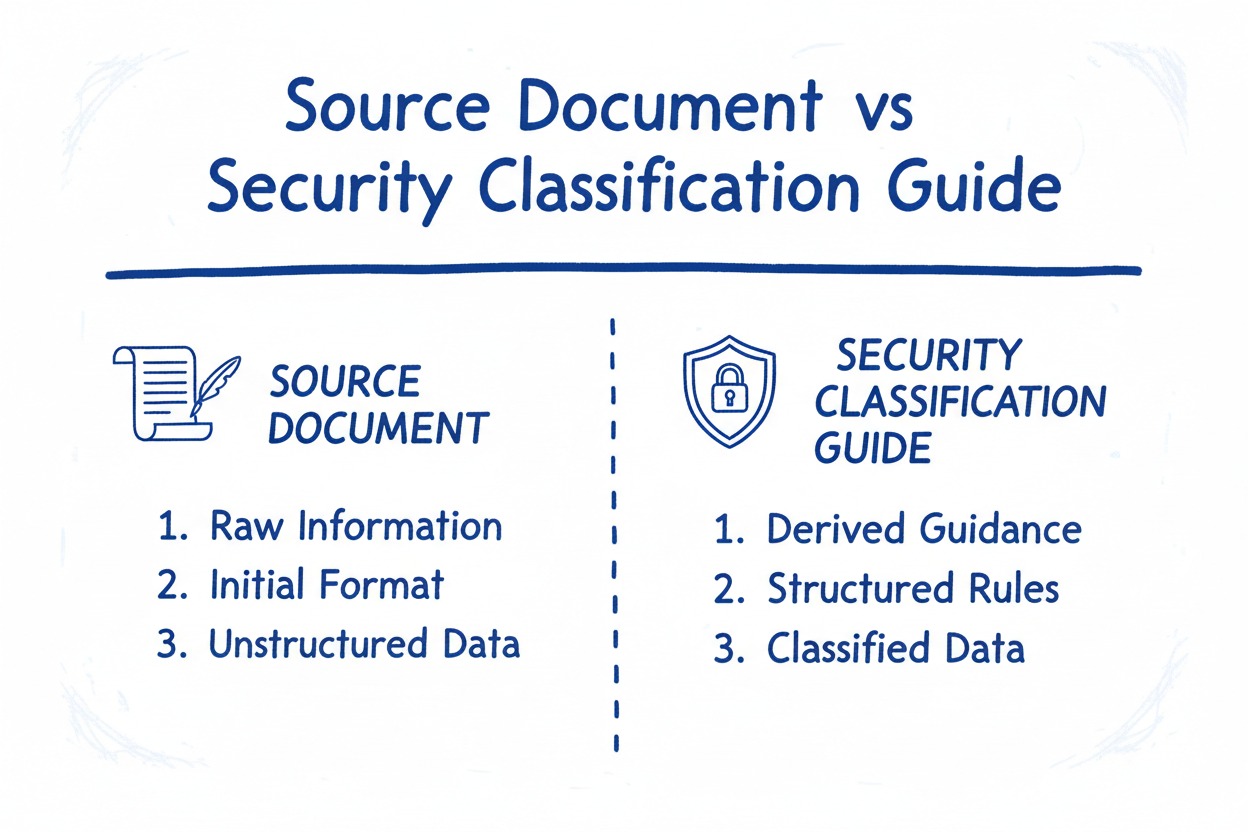
Here’s the part people often miss on the quiz at the end of the module: the Cyber Awareness Challenge frequently pairs SCG questions with questions about “source documents.” A source document can be an originally classified document, a derivatively classified one, or things like a memorandum, plan, message, letter, or order, according to CDSE’s own training materials. An SCG is one specific type of source document, but not every source document is an SCG.
A couple of practical tips from someone who has clicked through this training more than once:
- If a question describes something as “approved and signed by an OCA” and used specifically to guide new classification decisions, the answer is almost always security classification guide
- If a question describes something you would look at to determine how a piece of information was originally marked, but it isn’t the master rulebook itself, that’s more likely a source document
- Complete your training annually, since most agencies require it yearly and let it lapse if you skip a cycle
Security Classification Guide, Army Style: How AR 380-5 Handles It
The security classification guide army search shows up a lot too, and for good reason. The Army has one of the most detailed public frameworks for how these guides get built, laid out in Army Regulation 380-5, the Army Information Security Program.
Appendix G of AR 380-5 actually walks through a full sample classification guide format, and it’s genuinely useful to skim even if you’re not in uniform, because it shows exactly how granular a real guide gets. It doesn’t just say “this system is Secret.” It breaks the system down into individual technical elements, like vulnerability to countermeasures or electronic counter-countermeasure design principles, and assigns each one its own classification level with a citation back to the specific paragraph of the regulation justifying it.
A few things I found genuinely interesting when I went through the full text of AR 380-5:
- The regulation explicitly reminds users that overclassification or incorrect classification should be reported to the issuing activity, which tells you the Army actively wants people to challenge bad guidance rather than blindly follow it
- Even after something is marked unclassified within a guide, that does not automatically clear it for public release. There’s a separate approval process for that under AR 360-5
- The regulation applies not just to standard classified information but also extends to Sensitive Compartmented Information, Communications Security material, and Special Access Programs, each with their own layered safeguarding rules
If you’re in an Army-adjacent role and this is your first real exposure to a full SCG, I’d genuinely recommend reading through the appendix format once from start to finish rather than just memorizing the definition. Seeing the structure in action made the concept click for me far faster than any flashcard did.
Security Classification Guide vs Related Terms You’ll See Constantly
This is where most beginner guides fall short, and it’s the exact thing that confused me early on. There are four or five terms that get thrown around together, and they are not interchangeable. Here’s a table I wish someone had handed me on day one.
| Term | What It Actually Is |
|---|---|
| Security Classification Guide (SCG) | The master rulebook, written and signed by an OCA, listing classification levels, reasons, and durations for specific program elements |
| Original classification | The initial act of deciding a piece of information needs protection, only performed by an OCA |
| Derivative classification | Applying existing classification markings from a source (like an SCG) to a brand new document |
| Source document | Any originally or derivatively classified material used as a reference, including memos, plans, letters, or orders |
| Classification marking | The actual physical or digital label (Top Secret, Secret, Confidential) stamped or typed onto a document |
Getting these mixed up on a training quiz is incredibly common, and honestly, even experienced professionals slip up occasionally when they’re moving fast. The trick that finally worked for me: an SCG is where the rules live, a source document is any piece of material that already carries a classification, and derivative classification is the action of copying a rule from the SCG onto something new.
How Security Classification Guides Get Built, Step by Step
I wanted to include this section because most articles stop at the definition and never explain the actual workflow. Here’s roughly how the process plays out inside a typical defense or government program.
- The program or project kicks off, and someone realizes new information will be generated that might need protection.
- The Original Classification Authority reviews existing guidance first, checking whether any related program already has published classification guidance that overlaps.
- The OCA identifies specific elements of information that would cause damage to national security if disclosed without authorization, and determines the appropriate level for each.
- The guide gets drafted, usually in the table format we walked through earlier, with reasons and durations attached to every item.
- It gets formally approved and signed by the OCA, which is the moment it officially becomes an authoritative source.
- It gets distributed to everyone working on the program so derivative classifiers can reference it.
- It gets reviewed periodically. Classification guidance isn’t static. Technology changes, threats evolve, and guides need updates, or the information inside them becomes outdated and potentially over-restrictive.
One thing that surprised me when I first learned this workflow: the guide is supposed to be reviewed and kept current, and users are actually encouraged to flag outdated or incorrect guidance rather than just quietly working around it. That responsibility runs both directions, from the OCA down to the people using the guide every day.
Do Security Classification Guides Exist Outside the Military?
Most of what shows up when you search this topic centers on the Department of Defense, and that makes sense since the DoD, intelligence community, and federal contractors are where the term originated and where it’s used most heavily. But the underlying idea, writing down clear rules for how sensitive information should be categorized and protected, has spread into the broader cybersecurity and corporate world too, even outside a strictly military context.
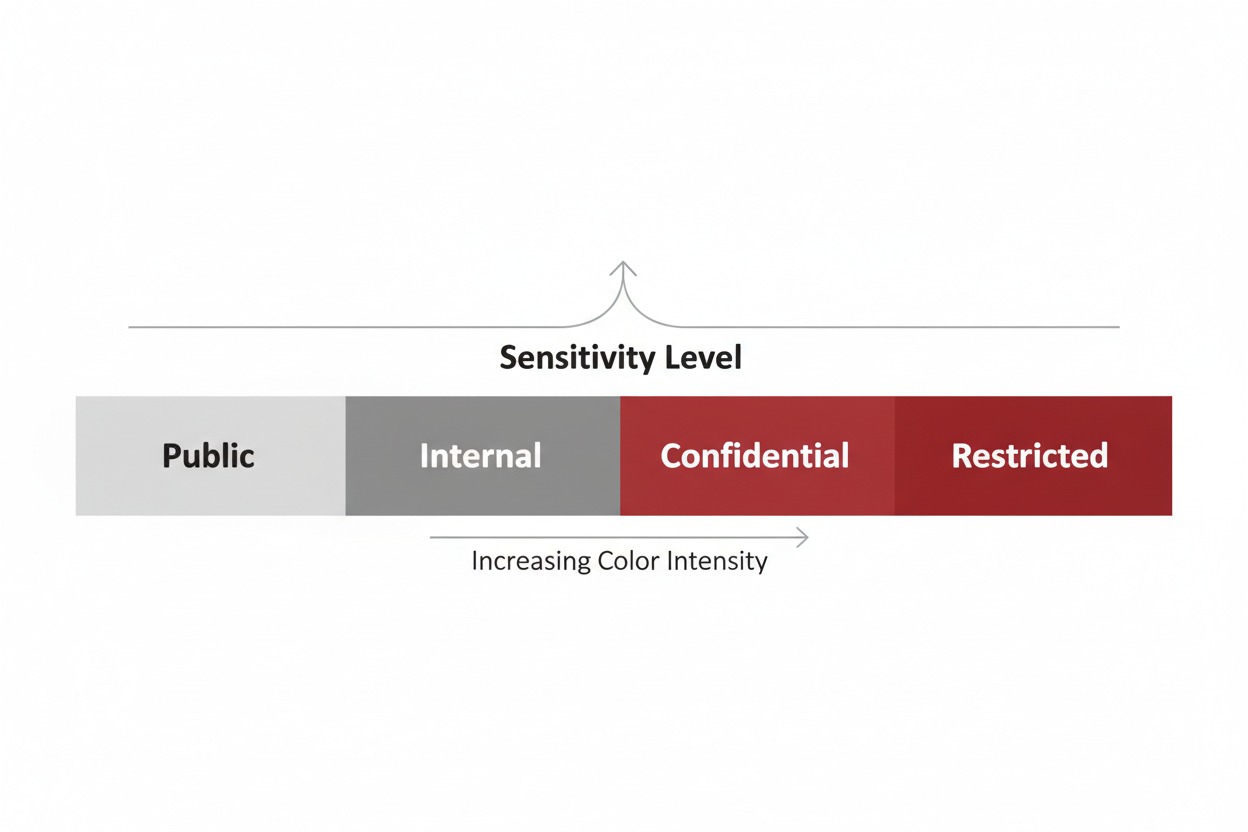
In private-sector information security, teams sometimes build internal classification frameworks that mirror the same logic as a government SCG, just without the formal OCA structure. They define sensitivity tiers, like public, internal, confidential, and restricted, and they document exactly which controls apply to each tier. According to a breakdown from Sulekha’s Tech Pulse on cybersecurity classification guides, this kind of guide helps organizations apply consistent access controls and compliance mechanisms based on how sensitive a given piece of data actually is, which supports broader information assurance and access control policies.
I’ve noticed the parallel myself while helping a friend set up a document classification policy for a small company. We weren’t handling anything close to national security information, obviously, but we borrowed the same structure: list the categories of information, assign a sensitivity level to each, explain why that level applies, and note how long that sensitivity lasts before a document can be shared more broadly. It made onboarding new employees dramatically easier because nobody had to guess whether a spreadsheet was safe to email externally. They just checked the guide.
The big difference is legal weight. A government SCG is backed by executive order and can carry criminal or administrative penalties for mishandling. A corporate classification guide is a policy document, not a matter of national security law. But the core mechanism- one authority decides the rules once and documents them clearly so everyone else can follow along- works the same way in both worlds.
Common Mistakes People Make With Security Classification Guides
Based on training materials, official guidance, and honestly some of my own early confusion, here are the mistakes that show up again and again.
- Assuming everything in a related document is classified. Not every sentence in a document tied to a classified program is automatically sensitive. Part of using an SCG correctly is learning to separate the classified elements from the unclassified surrounding text.
- Relying on memory instead of the actual guide. CDSE training explicitly warns against using memory or general assumptions about broad categories of information instead of checking authorized sources directly.
- Skipping the “reason for classification” field. People sometimes focus only on the level (Secret, Confidential) and ignore why something is classified, which matters a lot for downgrading and declassification decisions later.
- Forgetting that unclassified doesn’t mean releasable. As AR 380-5 points out, something being unclassified inside a guide does not automatically clear it for public release.
- Letting training lapse. Since 2019, derivative classification training has been required annually, and letting your certification expire can pull your access to work with classified material.
Expert Tips for Working With a Security Classification Guide
A few practical habits that make a real difference if your job actually touches these documents regularly:
- Always confirm you are looking at the most current version of the SCG, since older versions get superseded and using outdated guidance can lead to incorrect markings
- When guidance seems to conflict between two different sources, check for the conflict as early as possible in your process rather than guessing, and escalate it to your security manager
- Keep a personal note of which paragraph or item number in the SCG justifies each classification decision you make, because you may need to explain that reasoning later during an audit or declassification review
- If you’re new to a program, ask to sit down with the security manager for even fifteen minutes and have them walk you through the SCG structure before you start drafting anything. It saves hours of second-guessing later.
Pros and Cons of Security Classification Guides
| Details | |
|---|---|
| Pros | Creates consistency across an entire program or organization; speeds up derivative classification because people aren’t guessing; provides a documented paper trail for future declassification reviews; reduces both over-classification and under-classification when maintained properly |
| Cons | Can become outdated quickly in fast-moving technical fields; requires disciplined, periodic review or it loses accuracy; only as good as the original classification decisions behind it; misapplication or misreading of the guide can still lead to marking errors |
Frequently Asked Questions
What is a security classification guide in simple terms?
It’s an official document that lays out exactly which pieces of information about a program are classified, at what level, why, and for how long, so that everyone working with that program applies classification the same way.
Who is allowed to write a security classification guide?
Only an Original Classification Authority, a specifically designated official with delegated authority to make original classification decisions, can create and sign an SCG.
Is a security classification guide the same as a source document?
No. A source document is any material, originally or derivatively classified, that carries existing classification markings, including memos or letters. An SCG is a specific type of authoritative document that records original classification decisions and is used to guide derivative classification.
How often does a security classification guide get updated?
There’s no single fixed schedule across every agency, but guides are meant to be reviewed periodically, and personnel are encouraged to flag outdated or incorrect classification guidance to the issuing activity so it can be corrected.
Why does the Cyber Awareness Challenge test people on security classification guides every year?
Because misunderstanding classification guidance is one of the most common causes of real security incidents, whether through accidental over-sharing or improper marking, so annual refreshers help keep the concept fresh for anyone with access to classified systems.
Final Thoughts
Honestly, once I stopped treating “security classification guide” as some abstract compliance term and started picturing it as a shared rulebook that keeps everyone on the same page, the whole topic got a lot easier to hold onto. Whether you landed here from a Quizlet deck, an Army regulation, or your yearly Cyber Awareness Challenge, the core idea stays the same: one authorized person decides, writes it down clearly, and everyone else follows that same standard.
If government and legal terminology like this interests you, you might also enjoy our breakdown of what is the Supreme Law of the Land, which covers another foundational concept that shapes how authority and rules work in the United States. And if you’re getting into topics like this for the first time, feel free to poke around our About Us page to see what else we cover.
Got a specific question about classification guides that I didn’t cover here? Drop it in the comments, and I’ll do my best to walk through it with you.