


What Is a Viscount? Rank, History, and How It Fits Into Royalty
If you’ve ever watched a period drama or read a British history book and stumbled on the word “viscount,” you’ve probably wondered exactly where that title fits. Is it above an earl? Below a count? Is it even the same as a count?
Here’s the short answer: a viscount is the fourth-highest rank in the British peerage, sitting below an earl and above a baron. It’s a genuine, legally recognized noble title — not royalty in the sense of kings and queens, but part of the aristocratic hierarchy that has structured British society for centuries.
This guide breaks down exactly what a viscount is, where the title comes from, how it compares to a duke and a count, and what it actually means in England today.
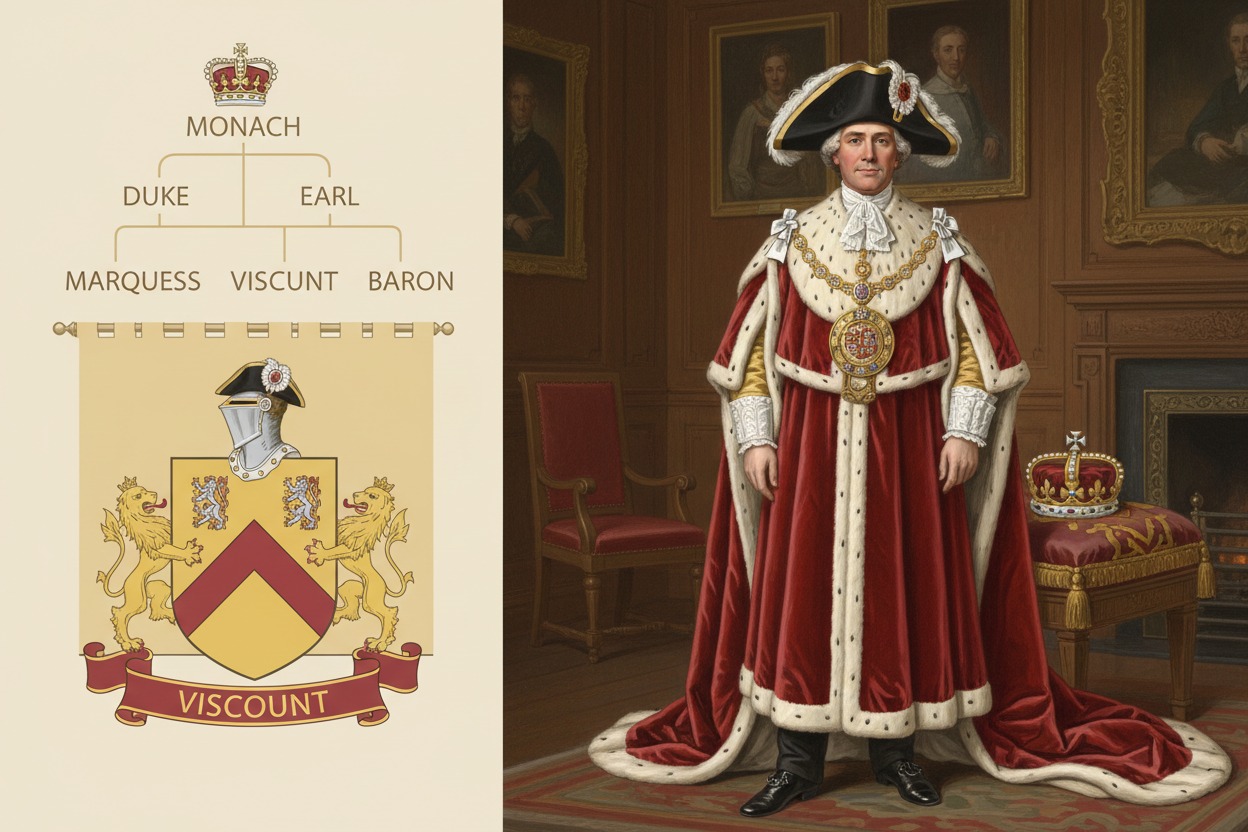
What Is a Viscount? The Basic Definition
A viscount (pronounced “VY-count,” with a silent s) is a title of European nobility. In the British peerage system, the five ranks in descending order of seniority are, according to Britannica: duke, marquess, earl, viscount, and baron.
That makes a viscount the fourth-ranking peer overall — more senior than a baron, but junior to an earl, a marquess, and a duke.
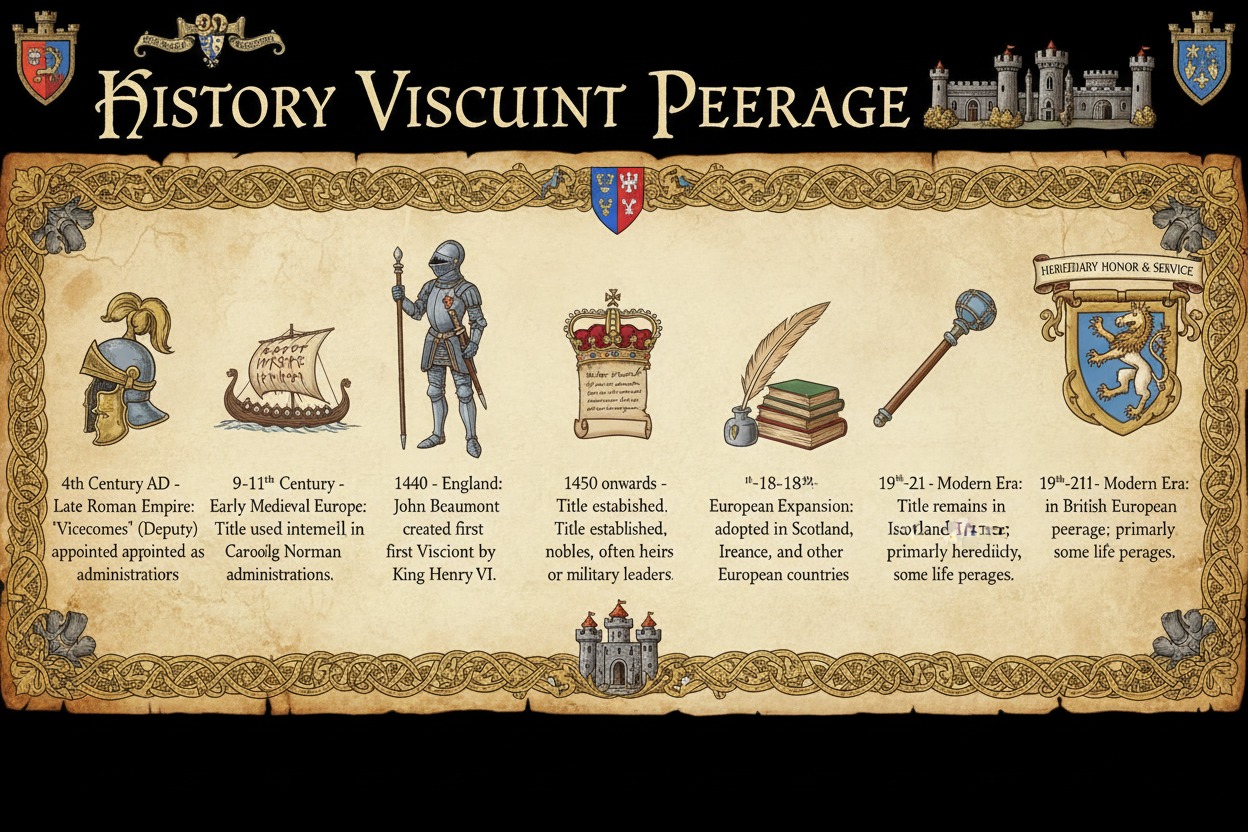
The word itself comes from the Latin vicecomes, meaning “vice-count” or “deputy of a count.” That origin isn’t just etymological trivia — it explains the entire history of the title.
Where the Title Comes From
During the Carolingian period of European history, vicecomites (viscounts) were literally deputies who acted on behalf of counts, exercising delegated administrative and judicial powers over a region, according to Britannica. Over time, as noted by LegalClarity, these deputy positions became hereditary, and the “deputy” eventually became a noble title in its own right rather than a job description.
The title arrived in England much later than the others. It wasn’t introduced into the English peerage until 1440, when King Henry VI created John, Lord Beaumont, as Viscount Beaumont — nearly four centuries after the Norman Conquest. The oldest surviving English viscountcy still in existence today is the Viscount of Hereford, created in 1550.
What Is a Viscount in Royalty?
This is where a lot of confusion comes in, because “royalty” and “the peerage” aren’t actually the same thing.
Royalty refers to the monarch and their immediate family — the King, Queen, princes, and princesses. The peerage, which includes viscounts, is the broader system of hereditary and appointed noble titles that sits just below royalty in the traditional social hierarchy.
A viscount is not a member of the royal family by default. It’s a peerage rank — one that can be inherited, historically created by the monarch through letters patent, or, in modern times, occasionally used as a courtesy title within a titled family. Some members of extended royal or noble families do hold viscount titles, but the rank itself is a peerage title, not a royal one.
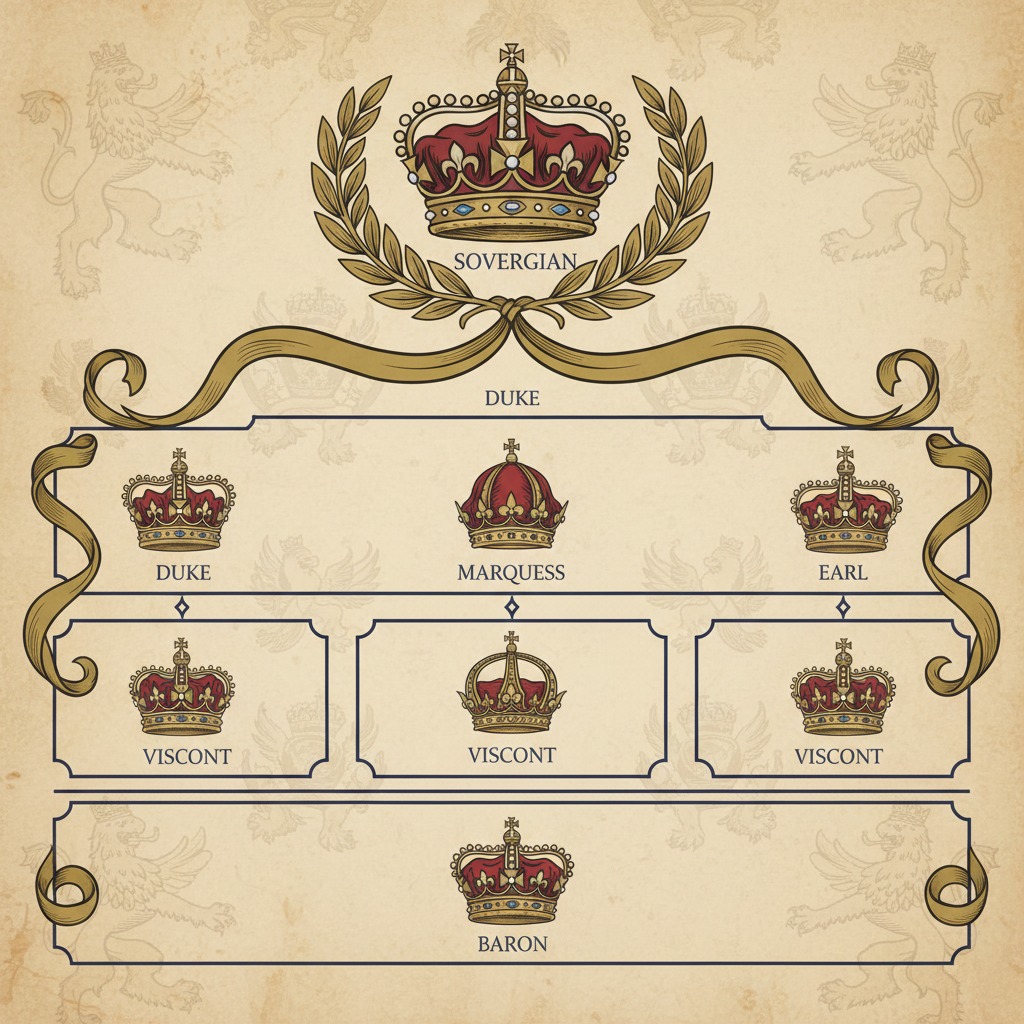
Where a Viscount Fits in the Full Hierarchy
| Rank | Position | Female Equivalent |
|---|---|---|
| The Sovereign | Above the peerage entirely | Queen |
| Duke | 1st (highest) | Duchess |
| Marquess | 2nd | Marchioness |
| Earl | 3rd | Countess |
| Viscount | 4th | Viscountess |
| Baron | 5th (lowest) | Baroness |
What Is a Viscount in England Today?
In modern England, a viscount is a substantive member of the peerage — meaning the title is legally held, recorded on the official roll of peers, and historically carried certain rights connected to Parliament, according to LegalClarity.
A few specifics worth knowing:
- Forms of address: A viscount is formally addressed as “Lord [Title],” and a viscountess as “Lady [Title]” — the full word “Viscount” is rarely used in direct conversation, similar to how earls and marquesses are addressed.
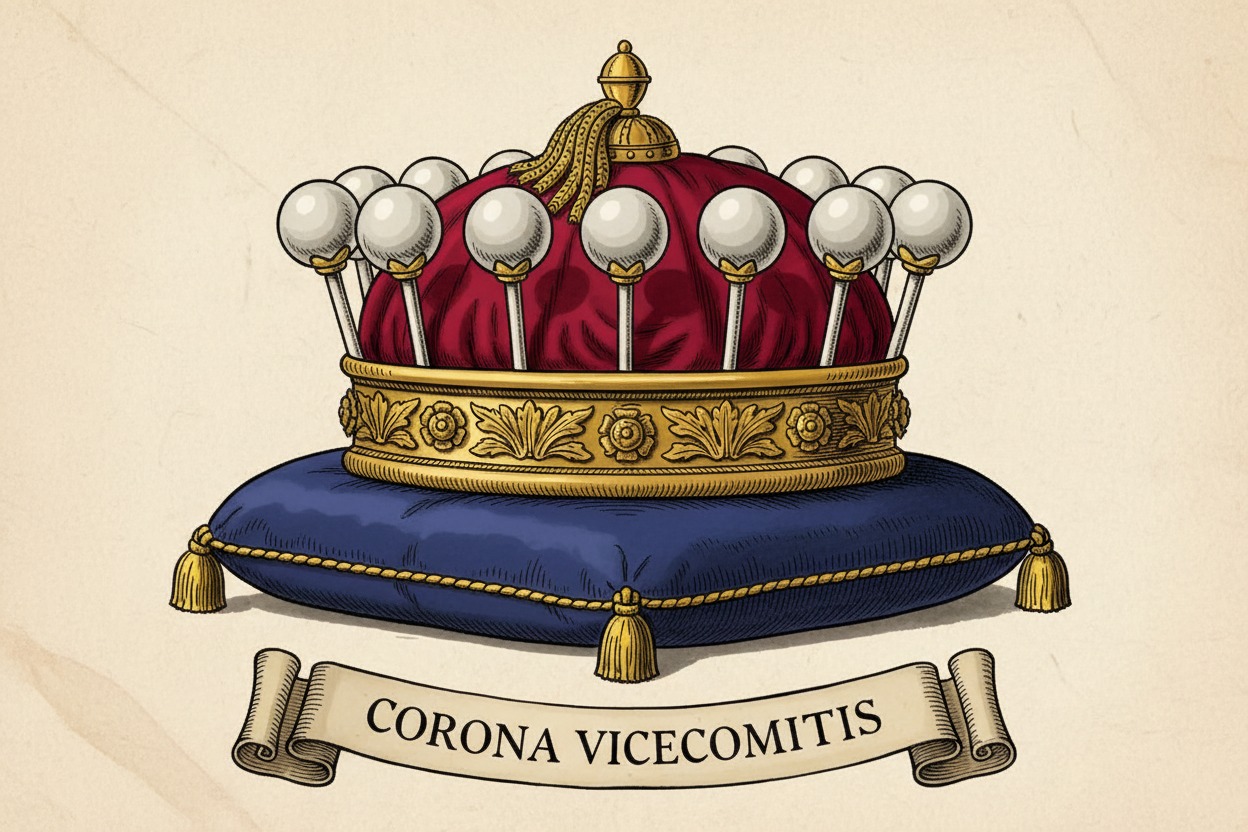
- The coronet: Each peerage rank has its own distinct ceremonial coronet. A viscount’s coronet is a silver-gilt circlet topped with sixteen silver balls (traditionally called “pearls”) arranged in a single row, with no other ornamentation. This detail makes it visually distinct from a duke’s strawberry-leaf coronet or an earl’s alternating pattern.
- Parliamentary robes: For formal occasions, a viscount’s ceremonial robe carries two and a half rows of white miniver fur trim, placing it between an earl’s three rows and a baron’s two.
- Substantive vs. courtesy titles: A “substantive” viscount holds the title in law. A “courtesy” viscount is typically the eldest son of an earl or marquess who uses one of his father’s lesser titles socially — but he isn’t legally a peer. He can’t sit in the House of Lords unless specifically summoned by the Crown.
As of recent counts, there are roughly 115 viscountcies across the UK peerages, with the premier English viscountcy — Viscount Hereford — dating back to 1550, according to figures compiled from Debrett’s and related peerage records.
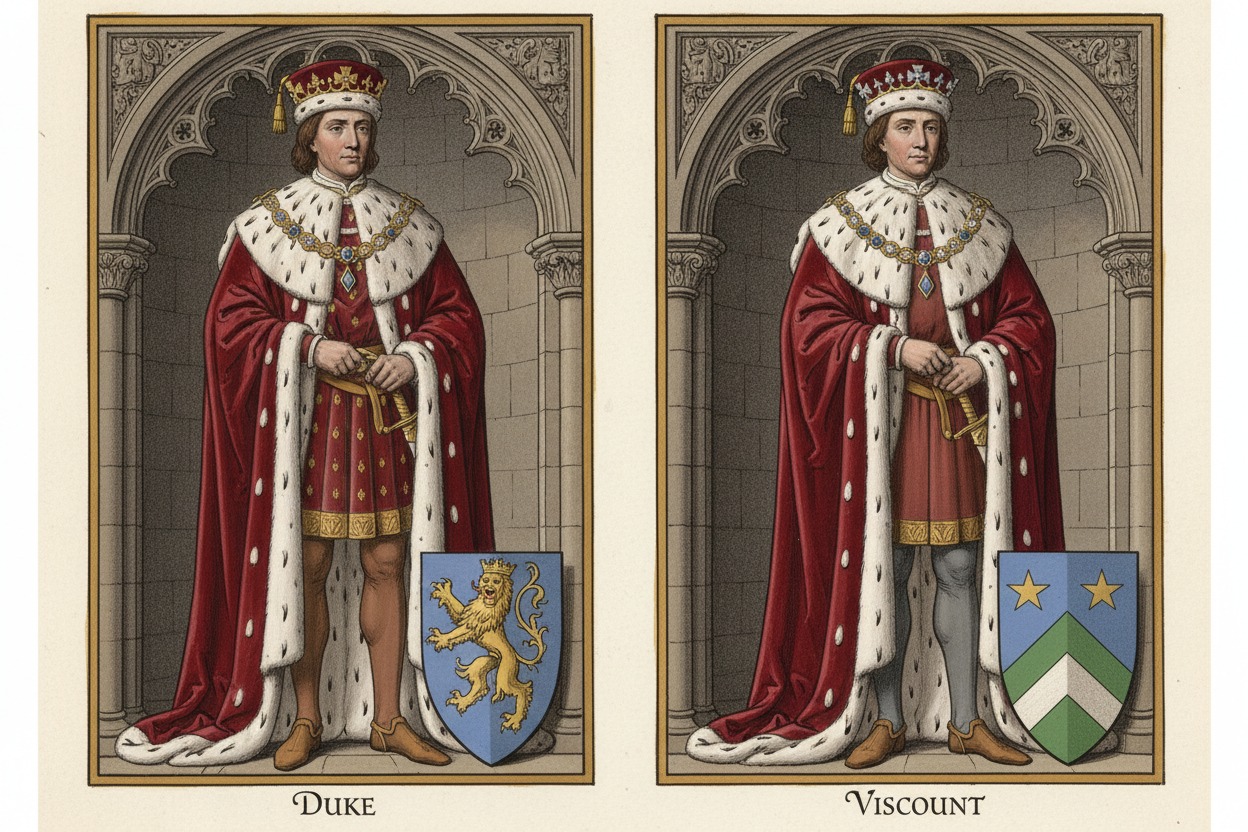
What Is a Viscount vs. a Duke?
This comparison highlights just how far apart these two ranks actually sit.
| Feature | Duke | Viscount |
|---|---|---|
| Rank | 1st (highest) | 4th |
| Form of address | “Your Grace” | “Lord [Title]” |
| Origin in England | 1337 (Edward III) | 1440 (Henry VI) |
| Coronet | Strawberry leaves | Row of 16 silver pearls |
| Historical role | Often near-sovereign or major territorial ruler | Originally a deputy or administrator for a county |
| Rarity | Fewer than 30 dukedoms currently exist | Roughly 115 viscountcies currently exist |
A duke is the most senior and exclusive rank in the entire peerage — historically close enough to royal status that the term comes from the Latin dux, meaning “leader,” and was first used in England for King Edward III’s own son. A viscount, by contrast, started life literally as a duke or count’s subordinate. The gap between the two ranks reflects centuries of that original power difference.
What Is the Difference Between a Count and a Viscount?
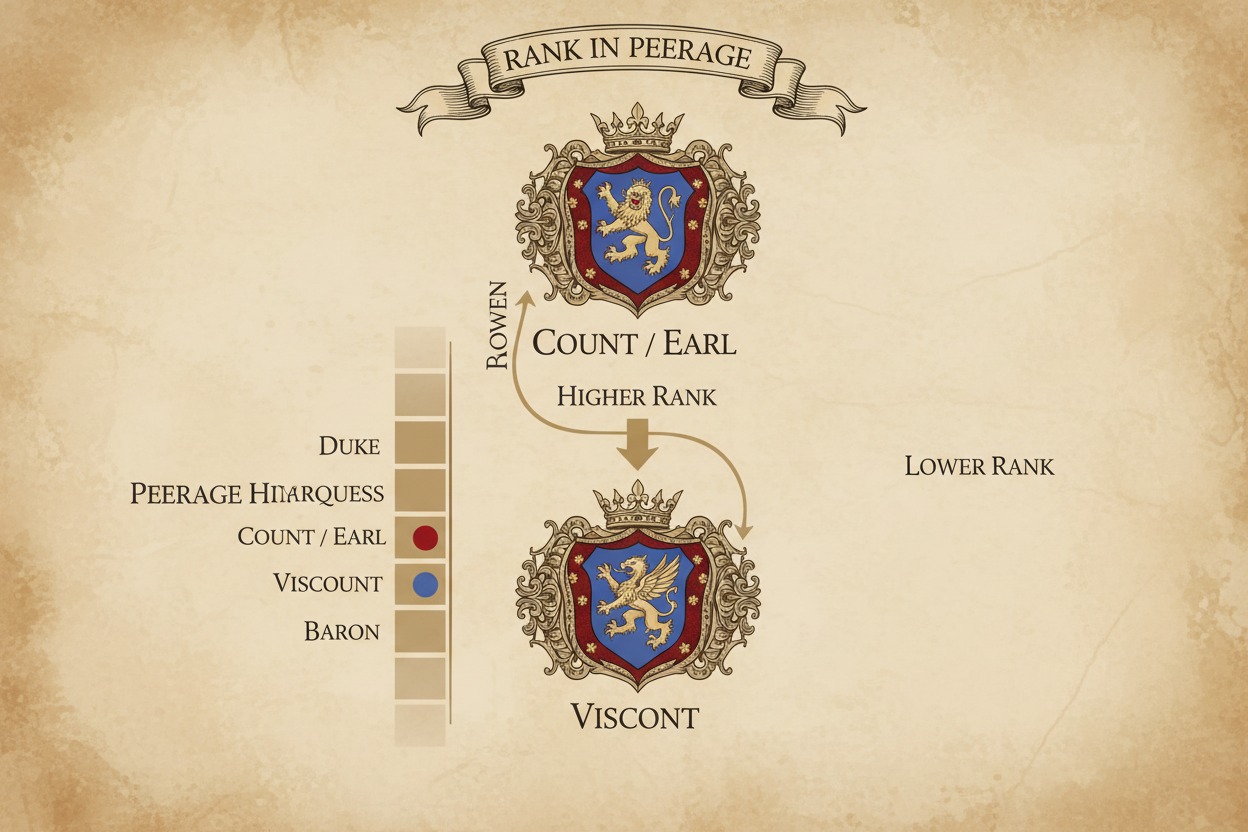
This is one of the most commonly confused pairs, mostly because English uses “earl” where most of Europe uses “count.”
- A count (or earl in England) is the third-highest rank in the peerage, above a viscount and below a marquess.
- A viscount is literally named for its historical relationship to a count — vicecomes means “deputy of the count.” It ranks directly below a count/earl and directly above a baron.
In practical terms today, a viscount is simply one rung below a count or earl in seniority, with the title’s entire history built around that original deputy relationship. The female equivalent of a count/earl is a countess. In contrast, the female equivalent of a viscount is a viscountess — and interestingly, “earl” has no female form of its own, which is why an earl’s wife (or a woman holding the rank) is called a countess rather than any variation of “earless.”
Quick Comparison Table: All Five Peerage Ranks
| Rank | Male Title | Female Title | Address | Introduced in England |
|---|---|---|---|---|
| 1 | Duke | Duchess | Your Grace | 1337 |
| 2 | Marquess | Marchioness | Lord/Lady | 1385 |
| 3 | Earl | Countess | Lord/Lady | c. 1016 (pre-Norman) |
| 4 | Viscount | Viscountess | Lord/Lady | 1440 |
| 5 | Baron | Baroness | Lord/Lady | 1264 (earliest surviving) |
Pros and Cons of Understanding the Peerage System
| Why It’s Worth Knowing | Where It Gets Complicated |
|---|---|
| Helps make sense of British history, literature, and period dramas | Titles, courtesy titles, and forms of address all have separate rules |
| Clarifies confusing terms like “count” vs. “earl” across different countries | A single person can hold multiple peerages of different ranks at once |
| Useful for understanding modern events like royal weddings and honors | The rank someone holds doesn’t always reflect real political power today |
Expert Tips for Getting the Terminology Right
- Don’t confuse “royalty” with “the peerage.” A viscount is a noble title, not a member of the royal family, even though some royals have held peerage titles at different points.
- Remember the order with a simple phrase. Duke, Marquess, Earl, Viscount, Baron — many people use a mnemonic like “Do Men Ever Visit Barns” to keep the order straight.
- Watch for “courtesy” titles in casual reading. Someone called “Lord [Name]” in a historical account might be the eldest son of an earl using a courtesy title, not an actual peer.
- Use “marquess,” not “marquis,” for British titles. “Marquis” is the French spelling; British usage is “marquess.”
- When in doubt about female titles, remember the pattern: duchess, marchioness, countess, viscountess, baroness — each corresponds directly to its male counterpart.
FAQs
1. What is a viscount in the simplest terms?
A viscount is the fourth-highest rank in the British peerage, ranking below an earl and above a baron, with roots as a historical deputy to a count.
2. What is a viscount in royalty?
A viscount is a peerage title, not a royal one — it sits below royalty in the traditional hierarchy, though members of noble or extended royal families sometimes hold viscount titles.
3. What is a viscount vs. a duke?
A duke is the highest peerage rank and historically carried near-sovereign status, while a viscount is the fourth rank, created as a deputy position beneath a count or earl.
4. What is the difference between a count and a viscount?
A count (called an earl in England) outranks a viscount; the word “viscount” literally means “deputy of the count,” reflecting the historical relationship between the two titles.
5. Is “viscount” still used today?
Yes. The title remains part of the active British peerage system, with roughly 115 viscountcies currently in existence, complete with formal forms of address, ceremonial coronets, and rules of inheritance.
Final Thoughts
A viscount occupies a specific, well-defined spot in the British peerage: the fourth of five ranks, historically born from a count’s need for a trusted deputy, and still recognized today with its own coronet, form of address, and place in the order of precedence. It isn’t royalty, but it is a genuine and enduring part of the aristocratic system that has shaped British history and society for nearly 600 years.
Want to go deeper into the peerage system? Compare how marquesses, earls, and barons each carry their own distinct history and ceremonial traditions — the differences are more fascinating than most people expect.
This article is for general informational and educational purposes.
Also Read: What Is the Supreme Law of the Land?